THE SUNDAY CARVERY
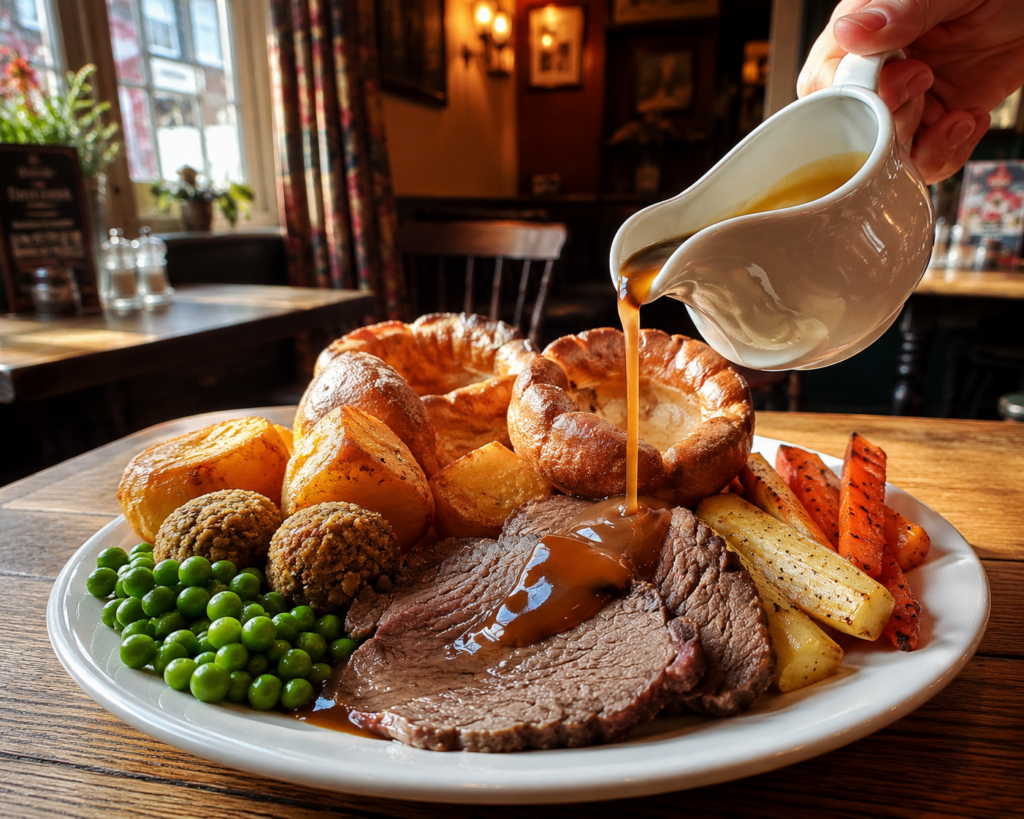
Sometimes the traditions that matter most are the ones we hardly notice until we realise how much we would miss them.
There is something about a Sunday carvery that feels timeless.
Walk into any local pub on a Sunday lunchtime and you will see it. Families squeezed around tables that are slightly too small. Grandparents in their good cardigans. Kids arguing over who gets the crispy Yorkshire pudding. Someone always goes back for seconds, even when they said they wouldn’t.
It is not fancy.
It does not need to be.
For a lot of families, the Sunday carvery is one of the few times in the week when everyone is actually in the same place at the same time.
No phones at the table, mostly.
No rush to be somewhere else, mostly.
Just food, conversation and the same arguments about whether the gravy is better this week than last week.
I think that is worth something.
We live busy lives. Work, school, shifts and commitments pull families in different directions for most of the week. The Sunday carvery is one of those small traditions that brings everyone back together, even if only for an hour or two.
It is also one of those things that gets passed down without anyone really deciding it should.
You do not plan to make it a tradition.
It just becomes one.
Suddenly you realise you have been going to the same pub, on the same day, for years, and the staff know your order before you have even sat down.
There is comfort in that.
My own family are regular Sunday carvery people.
Most Sundays, we all meet up around the same table. It has become one of those routines that nobody really questions anymore. It is simply what we do.
For me, one of the best parts is seeing the different generations together. Conversations that start with one person quickly spread around the table. Stories get retold. New stories get added.
At the centre of it all is the family matriarch, keeping an eye on everything and everyone, making sure nobody leaves hungry and somehow knowing exactly what is happening in everybody’s lives.
She also has the ability to silence an entire table with a single look.
Every family knows the one.
The look that says somebody has said something they shouldn’t have, pushed their luck a little too far or forgotten that they are not quite as funny as they think they are.
No words are needed.
The message is received immediately.
Even as adults, most of us still know better than to ignore it.
And, of course, there is the traditional family entertainment.
No matter how hard I try, I seem incapable of getting through a Sunday carvery without spilling gravy on myself, the table or occasionally both.
I have reached the point where my family now watches in anticipation to see how long it takes.
Somehow I can manage council meetings, political events and public speaking, yet a Yorkshire pudding and a gravy boat remain beyond my capabilities.
The jokes arrive before the gravy does.
And I would not have it any other way.
Because that is the thing about family traditions. They are not perfect. They are not polished. They are made up of small moments, shared memories and the little things we laugh about for years afterwards.
The carvery itself rarely changes much.
The same meats.
The same vegetables.
The same gravy boat that is apparently my greatest challenge.
And somehow that is part of the appeal.
In a world where everything else seems to change constantly, there is something reassuring about a roast dinner that tastes the same as it did last month, last year and probably will next year too.
It is also one of those places where generations mix without anyone really thinking about it.
Grandparents talking to grandchildren.
Parents catching up with each other while the kids argue about pudding.
Conversations that might not happen anywhere else because everyone is too busy during the week.
I do not think traditions need to be grand to matter.
Sometimes the smallest and most ordinary routines are the ones that hold families together.
A Sunday roast.
A regular table.
A familiar pub.
The same faces.
These are the things that quietly stitch families and communities together, one Sunday at a time.
Long after everything else in the week is forgotten, the Sunday carvery is still there.
And so is the family around the table.